


How to Make Cold Brew Coffee at Home
Summarize with ChatGPT Perplexity Claude

Quick Summary
Cold brew coffee is coffee brewed with cold or room temperature water instead of hot water. The slow extraction — typically 16–24 hours — produces a smooth, naturally sweet concentrate with significantly less bitterness and acidity than traditional hot-brewed coffee. You don't need special equipment. A jar, some coarsely ground coffee, water, and a strainer are all it takes.
We get asked about cold brew constantly at farmers markets. Once the weather turns warm in the Chicago suburbs, it's the first thing people want to talk about. The good news: making cold brew at home is one of the simplest brewing methods out there, and it rewards fresh coffee more than almost any other method.
Key Takeaways:
Not sure how much coffee to use? Pick your container, choose your strength, and get your exact recipe. Jump to the calculator ↓
What You Need to Make Cold Brew at Home

One reason cold brew is so popular is that the equipment list is almost comically short. You probably already own everything you need. Here's what to gather before you start.
That's it. No goose-neck kettle, no thermometer, no scale (though a scale helps if you want precision). Cold brew is the most forgiving brewing method you'll find.

How to Make Cold Brew Coffee: Step by Step
This method produces a ready-to-drink cold brew (not a concentrate). If you prefer concentrate that you dilute with water or milk, see the ratio adjustments in the next section.
Step 1: Grind Your Coffee Coarsely
Grind your coffee beans on the coarsest setting your grinder offers. You want a chunky, uneven grind — closer to raw sugar than fine sand. If you're buying pre-ground coffee, ask for a French press grind or select the coarsest option available.
Why does grind size matter so much? Cold brew steeps for hours, and fine grounds extract too quickly even in cold water. The result is a muddy, bitter brew that defeats the whole purpose. Coarse grounds extract slowly and evenly, which is how you get that signature cold brew smoothness.
Don't have a grinder? No problem. You can buy whole bean coffee and have it ground at any grocery store — just set the grinder to the coarsest setting. Or order your coffee in French Press grind when you buy online.
Step 2: Combine Coffee and Water
Add your coarsely ground coffee to the jar or pitcher. Pour cold or room temperature water over the grounds. Give it a gentle stir to make sure all the grounds are fully saturated — you don't want dry clumps floating on top.
For a ready-to-drink cold brew, use a 1:8 ratio — 1 cup of ground coffee to 8 cups of water. This produces a smooth, full-flavored brew you can pour straight over ice without diluting. For a stronger concentrate that you'll cut with water or milk later, use a 1:4 or 1:5 ratio instead.
Want to unlock even more flavor from your cold brew? Try a hot bloom before adding cold water. Pour just a couple ounces of hot tap water (or water around 150°F) over the grounds — just enough to wet them. Let it sit for about 30 seconds, then top off with cold water and steep as usual. The brief hit of heat releases CO2 and opens up the grounds, which helps cold water extract more sweetness and complexity during the long steep.
Step 3: Steep for 16–24 Hours
Cover your container and place it in the refrigerator. Let it steep for 16–24 hours. That's the window where the flavor is fully developed without tipping into over-extraction.
Steeping at room temperature (around 68–72°F) works too and extracts a bit faster — you may find 12–16 hours is enough at room temp. The fridge method takes a little longer but gives you more control and a cleaner result. Either way, you'll know it's done when the brew is dark, rich, and smells intensely like coffee.
Steep time is the most forgiving variable here. If you forget about it and it goes 26 hours, your cold brew will still taste great. It's not like hot brewing where 30 extra seconds can ruin a cup. That forgiveness is part of what makes cold brew perfect for busy mornings.
Step 4: Strain and Store
Set a fine mesh strainer over a clean bowl or pitcher. Line it with cheesecloth or a paper coffee filter if you want a super-clean, grit-free result. Pour the cold brew slowly through the strainer. Discard the grounds (they're great for your garden — coffee grounds add nitrogen to compost).
Transfer the strained cold brew to a sealed container and store it in the fridge. It'll stay fresh for 5–7 days, though the flavor is best in the first few days. That's one of the best parts of cold brew: make one batch on Sunday and you're set for the work week.

Cold Brew Ratios: Finding Your Perfect Strength
The ratio of coffee to water is what determines whether your cold brew is ready to drink straight or needs to be diluted. There's no single "right" ratio — it depends on how you like to serve it.
| Ratio | Strength | Best For | Example |
|---|---|---|---|
| 1:4 | Strong concentrate | Diluting with milk, water, or ice | 1 cup coffee : 4 cups water |
| 1:8 | Ready-to-drink | Pouring straight over ice | 1 cup coffee : 8 cups water |
| 1:12 | Light & refreshing | Hot days, all-day sipping | 1 cup coffee : 12 cups water |
We recommend starting with the 1:8 ratio for your first batch. It's strong enough to hold its own over ice without tasting watered down, and mild enough that most people enjoy it straight. If you find it too strong, you can always add water or milk after the fact. You can't un-concentrate a weak batch.
Cold Brew Ratio Calculator
Cold Brew Ratio Calculator
by Gigawatt Coffee RoastersAt farmers markets, the number one cold brew question we get isn't about ratios — it's "which coffee should I use?" People are always surprised that you don't need a special "cold brew" coffee. Any coffee you like hot, you'll probably like cold. That said, we have some favorites (more on that below).
Cold Brew vs. Iced Coffee: What's the Difference?
These two get confused constantly, but they're made in completely different ways and they taste different too.
Iced coffee is regular hot-brewed coffee that's been cooled down and poured over ice. It's fast (ready in minutes) but tends to taste more acidic and can get watery as the ice melts. Cold brew is never heated at all. The cold water extraction pulls out different compounds from the coffee grounds, resulting in a naturally smoother, sweeter, less acidic cup.
Research from UC Davis found that hot-brewed coffee had roughly 28–50% higher acid concentration than cold brew, despite similar pH levels. That lower acid extraction is a big part of why cold brew tastes smoother and sits easier on the stomach for a lot of people.
Source: Fuller & Rao, "Acidity and Antioxidant Activity of Cold Brew Coffee," Scientific Reports, 2018. (nature.com)
| Cold Brew | Iced Coffee | |
|---|---|---|
| Water temp | Cold / room temp | Hot (195–205°F) |
| Brew time | 16–24 hours | 3–5 minutes |
| Flavor profile | Smooth, naturally sweet, low bitterness | Brighter, more acidic, can taste watery |
| Acidity | 28–50% less acid | Same as regular hot coffee |
| Shelf life | 5–7 days in fridge | Best within 1–2 hours |
| Best for | Batch prep, smooth sipping, sensitive stomachs | Quick fix, bright coffee flavor |
The Best Coffee for Cold Brew
Any coffee you enjoy can be used for cold brew. That said, certain roast levels and flavor profiles tend to shine when brewed cold.
Medium and medium-dark roasts tend to produce the most crowd-pleasing cold brew. The cold extraction pulls out the chocolate, caramel, and nutty notes beautifully while leaving behind most of the bitterness. Light roasts can work too, but they'll produce a lighter, more tea-like cold brew with fruit-forward notes — great if that's your thing, but not what most people expect.
Freshness makes a bigger difference in cold brew than almost any other method. Because you're steeping for hours, stale coffee has nowhere to hide. Those flat, papery flavors that you might mask with cream in a hot cup? They come through loud and clear in cold brew. Using freshly roasted beans — ideally within 2–4 weeks of the roast date — is the single biggest upgrade you can make.
Why Air Roasted Coffee Makes Great Cold Brew
During the air roasting process, the chaff (the thin, papery skin on every coffee bean) gets blown away by the hot air current and collected in a separate chamber. In traditional drum roasting, that chaff stays in contact with the beans, and some of it chars. That burnt chaff is one of the reasons drum-roasted coffee can taste bitter or ashy.
With cold brew, you're extracting for 16–24 hours. Any harshness in the beans has a long time to seep into the water. Starting with air roasted coffee - where those bitter compounds were already removed - gives you a cleaner starting point and a noticeably smoother result.
"People are always surprised by how much smoother cold brew tastes with air roasted beans. The chaff is already gone before the coffee even hits the water, so you're starting cleaner. It's one of those things where you don't realize how much it matters until you try it side by side."
— Eli Coleman, Co-Founder and Head Roaster at Gigawatt Coffee Roasters.
Our Top Picks for Cold Brew
These are the coffees our customers come back to specifically for cold brew, based on years of feedback at markets and online:
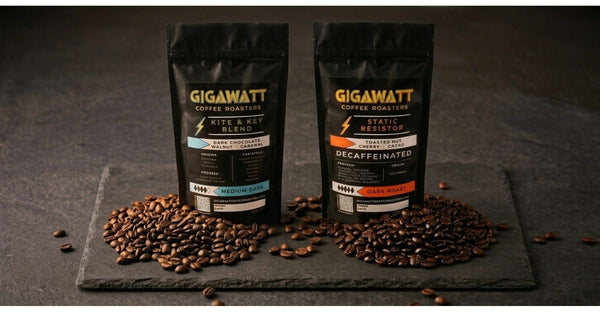
Kite & Key Blend - Our bestseller and the most popular choice for cold brew. The dark chocolate, walnut, and caramel notes come through rich and smooth when brewed cold. Medium-dark roast, so it holds up over ice without fading.
Live Wire Espresso - If you want a bolder, more intense cold brew that stands up to milk or cream, this is the one. Dark roast with a full body that doesn't quit.
Costa Rican Tarrazu - For a lighter, brighter cold brew with fruit-forward notes. This one is great for people who want something refreshing and a little different from the typical chocolate-and-nut cold brew profile.

Not in the mood to wait 18 hours? Our cold brew comes ready to drink, two ingredients, shelf stable for a year.
Cold Brew Troubleshooting
Cold brew is forgiving, but sometimes a batch doesn't come out the way you expected. Here are the most common issues and how to fix them.
Shopping for a cold brew fan? Our canned cold brew made our list of coffee gifts for coffee lovers.
Frequently Asked Questions
Can I use pre-ground coffee for cold brew?
Yes, pre-ground coffee works for cold brew. Look for a coarse grind labeled "French press" — that's the right texture. Freshly ground beans will always give you better flavor since grinding releases the coffee's oils, and those oils start to fade within minutes of grinding. But if pre-ground is what you have, it'll still make a solid cold brew.
How long should cold brew steep?
Steep cold brew for 16–24 hours in the refrigerator. If you're brewing at room temperature, 12–16 hours is usually enough since warmer water extracts faster. The sweet spot for most people is right around 18–20 hours in the fridge. Going a few hours over won't ruin it — cold brew is very forgiving.
Does cold brew have more caffeine than regular coffee?
Cold brew concentrate has more caffeine per ounce than regular drip coffee because of the high coffee-to-water ratio. However, most people dilute their concentrate with water, milk, or ice before drinking, which brings the caffeine level closer to a normal cup of hot coffee. If you brew at a 1:8 ready-to-drink ratio, the caffeine content is comparable to drip coffee.
Can I heat up cold brew coffee?
Absolutely. Cold brew heats up beautifully and maintains its smooth, low-acid flavor. Just warm it gently on the stove or microwave — don't boil it, as that can change the flavor. Many people make cold brew in the summer and switch to heating it in the fall, keeping the same smooth taste year-round.
What is the best ratio for cold brew coffee?
For ready-to-drink cold brew, a 1:8 ratio (1 cup coffee grounds to 8 cups water) is a great starting point. For a stronger concentrate that you'll dilute later, use 1:4 or 1:5. There's no universal "best" — it depends on whether you drink it straight, add milk, or pour it over ice. Start at 1:8 and adjust from there.
How long does cold brew last in the fridge?
Cold brew stays fresh in the fridge for 5–7 days when stored in a sealed container. The flavor is best during the first 3–4 days. After about a week, it starts to taste flat and stale. Making a batch on Sunday sets you up for the entire work week.
Can I make cold brew with a French press?
A French press is actually one of the best tools for cold brew. Add your coarsely ground coffee, pour in cold water, stir gently, and put the lid on without pressing the plunger down. After 16–24 hours, press the plunger to separate the grounds and pour. The built-in mesh filter does most of the straining work for you.
Is cold brew better for your stomach than hot coffee?
Many people find cold brew easier on their stomach because the cold extraction process results in lower acid levels — research has shown roughly 28–50% less titratable acid compared to hot-brewed coffee. If regular hot coffee bothers your stomach, cold brew is worth trying. That said, results vary from person to person.
Cold brew is one of the simplest ways to enjoy coffee at home, and it rewards good beans more than almost any other method. Make a batch this weekend and taste the difference fresh, air roasted coffee makes. Once you try it, the coffee shop version never quite hits the same.
Ready to Make Your Best Cold Brew?
Start with fresh, air roasted beans and taste the difference. Our Kite & Key Blend is the fan favorite for cold brew — smooth, bold, and never bitter.
Shop Kite & Key Blend
Don't feel like making it yourself? We also sell ready-to-drink cold brew coffee in 12 oz cans — same air roasted beans, brewed low and slow, lightly infused with nitrogen for a crisp finish. No sugar, no additives, just coffee and water.
 WHY COFFEE TASTES BITTER →
 WHAT ARE TASTING NOTES →
 BAKING WITH COLD BREW →