


Cold Brew vs Iced Coffee: What's the Difference, and Which Should You Pick?
Summarize with ChatGPT Perplexity Claude

Cold brew vs iced coffee comes down to one thing: heat. We get asked this constantly at our farmers market booths once the weather warms up, because the two drinks are made in completely different ways.
Quick Summary
Cold brew is coffee steeped in cold water for a full day (we always steep ours 24 hours). Iced coffee is coffee brewed hot, then poured over ice. Heat pulls flavor out in minutes, so iced coffee tastes brighter and crisper. Cold water works slowly, so cold brew tastes smoother, rounder and less bitter.
At our market booths we serve hot coffee, iced coffee and nitro cold brew, so this one comes up a lot. Here's the whole answer: how each one is made, why they taste so different, which has more caffeine, and the beans we'd reach for. Then drink whichever one you like, however you like it.
Key Takeaways:
What's the difference between cold brew and iced coffee?
Iced coffee is regular coffee. You brew it with hot water the way you always do, in a drip machine, a pour over or a French press, and then you chill it, usually by pouring it over ice. Start to finish, it takes about 10 minutes.
Cold brew never sees hot water. You stir coarsely ground coffee into cold or room temperature water and let it sit for 24 hours, then strain out the grounds. Time does the work that heat does in a regular brew.

That one change, hot water for a few minutes versus cold water for a day, changes almost everything you notice in the glass: the flavor, the body, how long it keeps, and how strong it ends up.
Cold brew vs iced coffee at a glance

Here's the full side-by-side, from how each one is brewed to how long it keeps.
| Aspect | Iced Coffee | Cold Brew |
|---|---|---|
| How it's brewed | Hot water, then chilled or poured over ice | Steeped in cold or room temperature water |
| Water temperature | Just off the boil, around 195–205°F | Cold from the tap or fridge |
| Brew time | About 4–5 minutes | 24 hours in the fridge |
| Grind | Medium, like sand (for drip or pour over) | Coarse, like raw sugar |
| Taste | Brighter and crisper, more aroma | Smoother and rounder, less bitter |
| Flavor notes that come through | Fruit, citrus, florals | Chocolate, caramel, nuts |
| Body | Lighter | Fuller, silkier |
| Caffeine | Same as hot coffee brewed at that strength | Depends on the ratio: a 1:4 concentrate is twice as strong as 1:8 |
| Keeps in the fridge | Best the same day | 5–7 days |
| Best for | Right now, and light or fruity coffees | Making a batch for the week, and drinking it black |
Why do cold brew and iced coffee taste so different?
Hot water works fast. In 4 or 5 minutes it pulls out the aromatic oils and the bright, sharp-tasting compounds that make a hot cup smell so good, along with some of the bitter ones. Chill that coffee and you keep the brightness, which is why iced coffee tastes crisp and a little zippy.
Cold water is slow. Even over a full 24 hours, it leaves more of the sharp and bitter-tasting compounds behind and pulls out the heavier, sweeter flavors. That's why the same coffee can taste like milk chocolate as cold brew and like red apple as iced coffee.
It's also why cold brew is so forgiving. Brew a hot cup 30 seconds too long and you'll taste it. Let cold brew go 26 hours instead of 24 and you'll barely notice. If your cold brew does taste bitter, the usual culprits are a grind that's too fine or a steep that went far too long; our guide on why coffee tastes bitter walks through the fixes.
Is cold brew less acidic than iced coffee?
You'll see that claim on a lot of labels. The research is more mixed than the marketing. A 2018 study from Thomas Jefferson University measured cold and hot brews made from the same coffees and found their pH was almost the same, between 4.85 and 5.13. The hot brews did have more of the acids you taste as brightness, which lines up with what people notice: cold brew tastes mellower, even if the pH isn't very different.
Which has more caffeine, cold brew or iced coffee?
Neither one always wins. Caffeine comes down to how much coffee you use for how much water, not whether the water was hot or cold.
- Ready-to-drink cold brew (our recipe: 1 cup of coffee to 8 cups of water) is meant to be poured straight over ice, about like a regular cup.
- Cold brew concentrate (1 cup of coffee to 4 cups of water) uses twice the coffee in the same water. Drink it straight and it's much stronger; cut it half and half with milk or water and you're back near a regular cup.
- Iced coffee has the caffeine of the hot coffee it started as. Brewed double strength and poured over ice, it ends up close to a normal cup once the ice melts in.
Café cold brew often lands on the stronger side because shops tend to brew it strong. If you're watching caffeine, check the menu's numbers rather than guessing from the name.
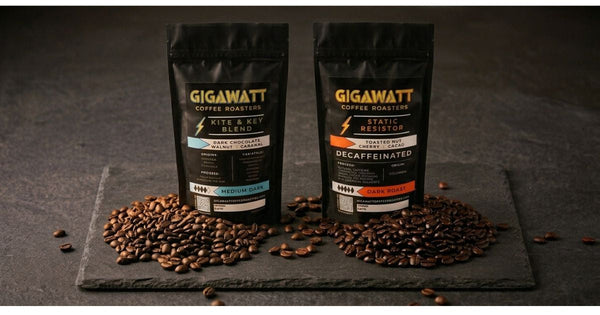
Want the taste with less of the kick? Make cold brew with our Half Caff Combo (here's how half caff works), or go all the way with Static Resistor, our water processed decaf. Decaf isn't zero: the FDA says it typically has 2 to 15 milligrams in an 8 oz cup.
How to make iced coffee that doesn't taste watery
If your iced coffee ever tastes watery, it's usually because a regular-strength hot cup went over ice and the melting ice thinned it out. The easy fix is to brew it stronger, so the ice finishes the job. Here's a simple place to start:
- Use your usual amount of coffee and about half the water. For a 16 oz glass, brew 8 oz of coffee.
- Brew it hot, the way you normally do. Drip, pour over or French press all work. A pour over is the classic way to brew straight onto ice; our pour over vs French press guide covers both methods.
- Pour it straight over a full glass of ice while it's hot. The ice melts into the missing half and chills it in seconds.
- Enjoy it the same day. Brewed coffee that sits in the fridge for days starts to taste flat.
Then make it yours: milk, cream, a sweetener or nothing at all. Too strong? Add water or milk. Too weak? Use a little more coffee next time.
How to make cold brew at home (the short version)
You need a jar, a strainer and a day of patience. Here's where we'd start (it's the same recipe as our full cold brew guide), and then you can adjust it to your taste:
- Grind coarse, like raw sugar, not sand. Buying ground? Pick French Press.
- Stir 1 cup of grounds into 8 cups of cold water. For a concentrate to cut with milk or water, use 4 cups of water instead.
- Optional hot bloom: wet the grounds with a couple ounces of hot water (around 150°F), wait 30 seconds, then add the cold water.
- Steep 24 hours in the fridge. That's what we always recommend: a full day tastes noticeably better than a shorter steep.
- Strain through a fine mesh strainer, lined with cheesecloth or a paper filter for an extra-clean glass. It keeps 5 to 7 days in the fridge.
Too strong? Add water, milk or ice. Too weak? Next batch, use a little less water or let it steep longer. There's no wrong answer, only the one that tastes right to you.


For the full walkthrough, troubleshooting and a calculator that works out the exact amounts for your jar, see how to make cold brew coffee at home. Got concentrate left over at the end of the week? It's great in baking with cold brew.
What is nitro cold brew?
Nitro cold brew is cold brew infused with nitrogen. The tiny bubbles give it a creamy, almost velvety texture and a foamy head, a little like a stout beer, without any milk or sugar. On tap it pours with that cascading look; in a can, you shake it to wake the nitrogen up.

Our canned cold brew is made with our own air roasted beans and lightly infused with nitrogen. Each 12 oz can is just coffee and water, medium roast, with no sugar or dairy, and it's shelf stable, so you can keep a few in the pantry or at the office and chill them when you want one.
It's the answer for anyone who loves cold brew but isn't going to plan a day ahead. Shake the can, pour it over ice, and you've got cold brew in about 10 seconds.
Seeing us at a market? Ask for a nitro cold brew.

"This cold brew nitro coffee has a bold taste without being bitter. In fact its smoothness is a wonderful surprise. I would recommend this Nitro Cold Brew to anyone who loves iced coffee."
— Joseph H., verified Gigawatt cold brew buyer

A single can is $4.99, or $49.99 for a 12-pack.
Cold brew or iced coffee: which should you pick?
Pick cold brew if…
- You drink your coffee black and want it smooth
- Regular coffee tastes too bitter or sharp to you
- You like chocolatey, caramel-y coffee
- You want one batch to last the work week
- You'd rather make it once on Sunday than every morning
Pick iced coffee if…
- You want a cold coffee in the next 10 minutes
- You love bright, fruity coffees and want to taste those notes
- You already have a drip machine or pour over set up
- You only want one glass, not a jar
- You switch between hot and iced depending on the day


The best coffee for cold brew and iced coffee
Any coffee works for either, but some shine more in one than the other. Our rule of thumb from the light roast vs dark roast question: cold brew loves medium and medium dark roasts, and iced coffee is where lighter roasts and fruity tasting notes get to show off. And whatever you add after, oat milk, cream or vanilla, is completely up to you.
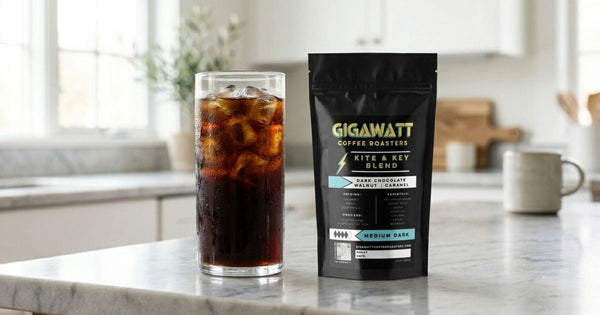
- For cold brew you drink black: Kite & Key Blend. Medium dark, with dark chocolate, walnut and caramel. It gets more cold brew mentions in our reviews than any other bag; one customer wrote, "This blend is PERFECT for cold brew."
- For cold brew with milk or cream: Live Wire Espresso Blend, our darkest blend. It holds its own against milk, cream or a splash of syrup.
- For iced coffee, or a lighter cold brew: Luminosity Breakfast Blend. Medium roast with milk chocolate, citrus and apple notes that come through bright over ice.
Every one of them is air roasted. The beans ride on a bed of hot air rather than tumbling against a hot drum wall, so nothing scorches. That's where our "never bitter, never burnt" line comes from, and it shows up in a cold cup whether you drink it black or load it up. More on that on our air roasted coffee page and our page on coffee that isn't bitter.


Want to see them all in one place? Our cold brew coffee collection has the cans plus every bag we'd reach for to make it at home.
Frequently asked questions
Is cold brew stronger than iced coffee?
Not automatically. Strength depends on how much coffee is used for the water. Ready-to-drink cold brew made at 1 cup of coffee to 8 cups of water is about as strong as a regular cup. Cold brew concentrate, at 1 to 4, is twice as strong and is usually cut with milk or water before drinking.
Can you use regular coffee to make cold brew?
Yes. Any coffee works, as long as it's ground coarse, like raw sugar. Fine grounds turn cold brew muddy and bitter. If you buy ground coffee, choose a French Press grind. Medium and medium dark roasts give the smoothest result.
How long does cold brew last?
Homemade cold brew keeps 5 to 7 days in a sealed container in the fridge, and it tastes best in the first few days. Iced coffee is best the day you brew it. Our canned cold brew is shelf stable until you open it.
Can you make iced coffee with cold brew?
Yes. Pour cold brew over ice and you have an iced coffee drink, and plenty of cafés serve it exactly that way. The difference is only in how the coffee was brewed: cold brew over ice tastes smoother, while hot-brewed coffee over ice tastes brighter.
Is cold brew better than regular coffee?
It's not better, just different. Cold brew is smoother and less bitter, which a lot of people prefer, especially black. Hot coffee and iced coffee keep more of the bright, aromatic flavors that cold water leaves behind. Try the same coffee both ways and see which you like.
What is healthier, iced coffee or cold brew?
Neither is healthier on its own. Black, both are just coffee and water. The real difference usually comes from what you add: milk, cream, sugar and syrups change a drink far more than the brewing method does.
Can you heat up cold brew?
Yes. Mix cold brew concentrate half and half with hot water for a smooth hot cup, or warm ready-to-drink cold brew gently on the stove or in the microwave. It will taste mellower than coffee brewed hot.
So which is better, cold brew or iced coffee? The one you'll enjoy. Made in a Mason jar or poured from a can, there's no wrong way to drink it. Start with fresh coffee you like, and make it yours.