
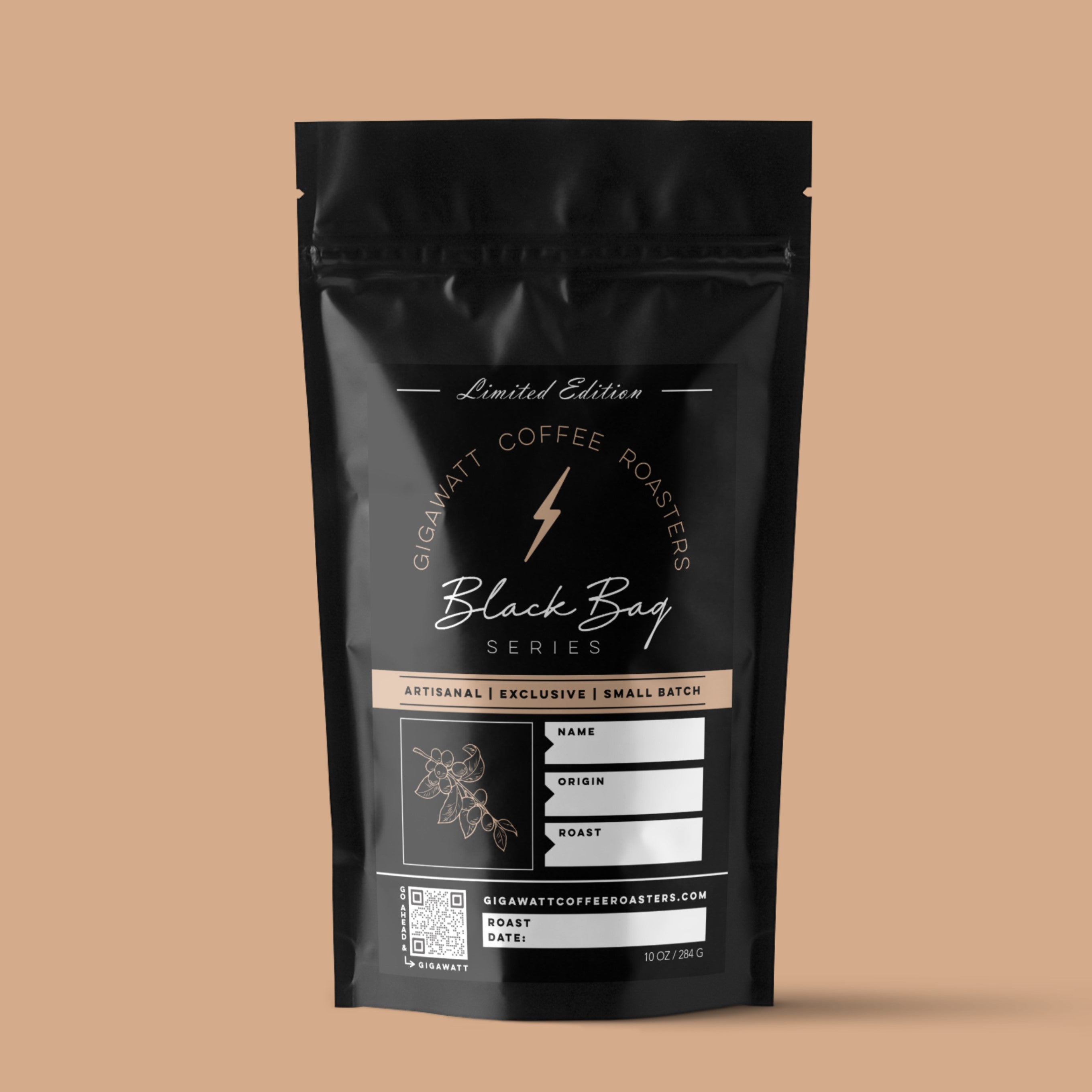
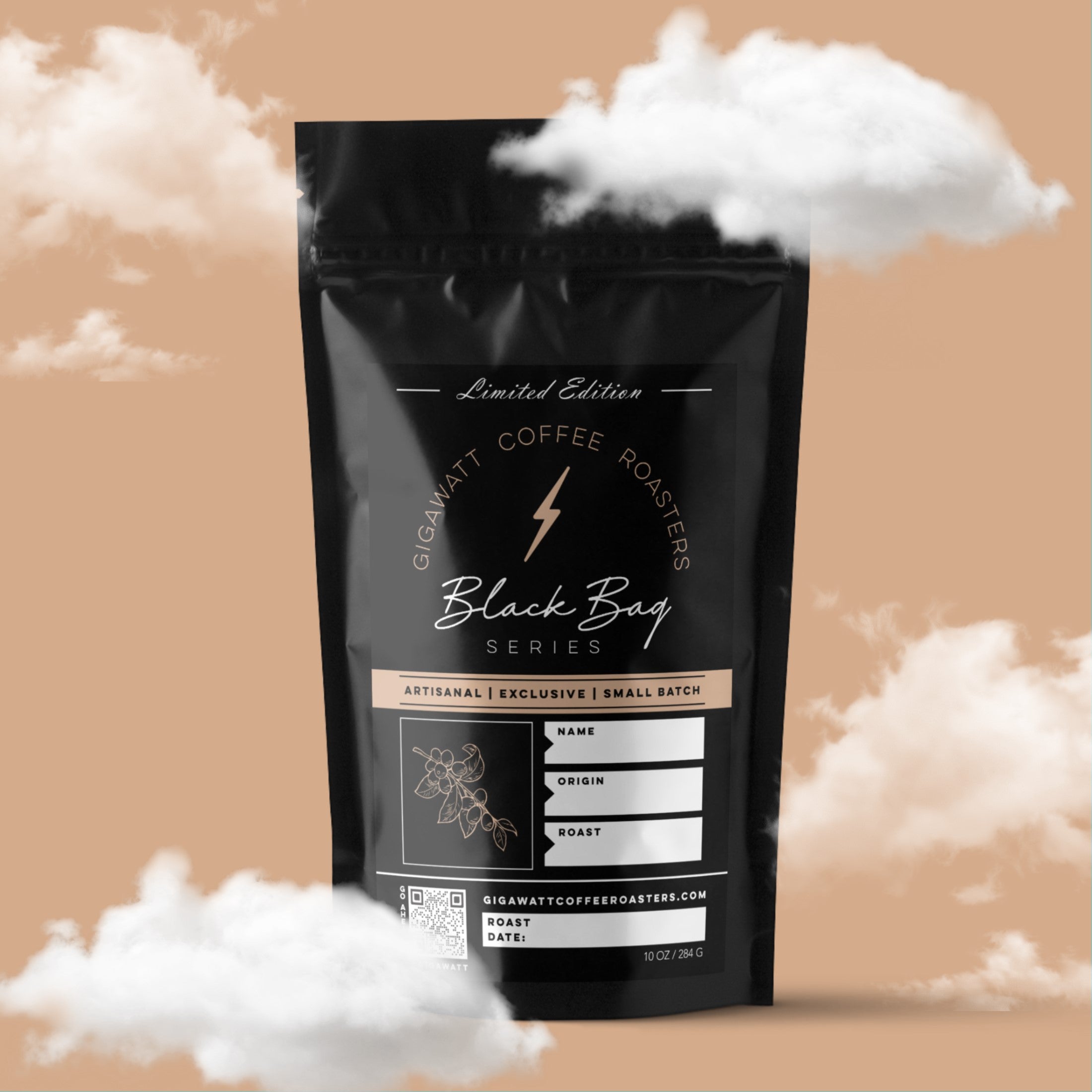
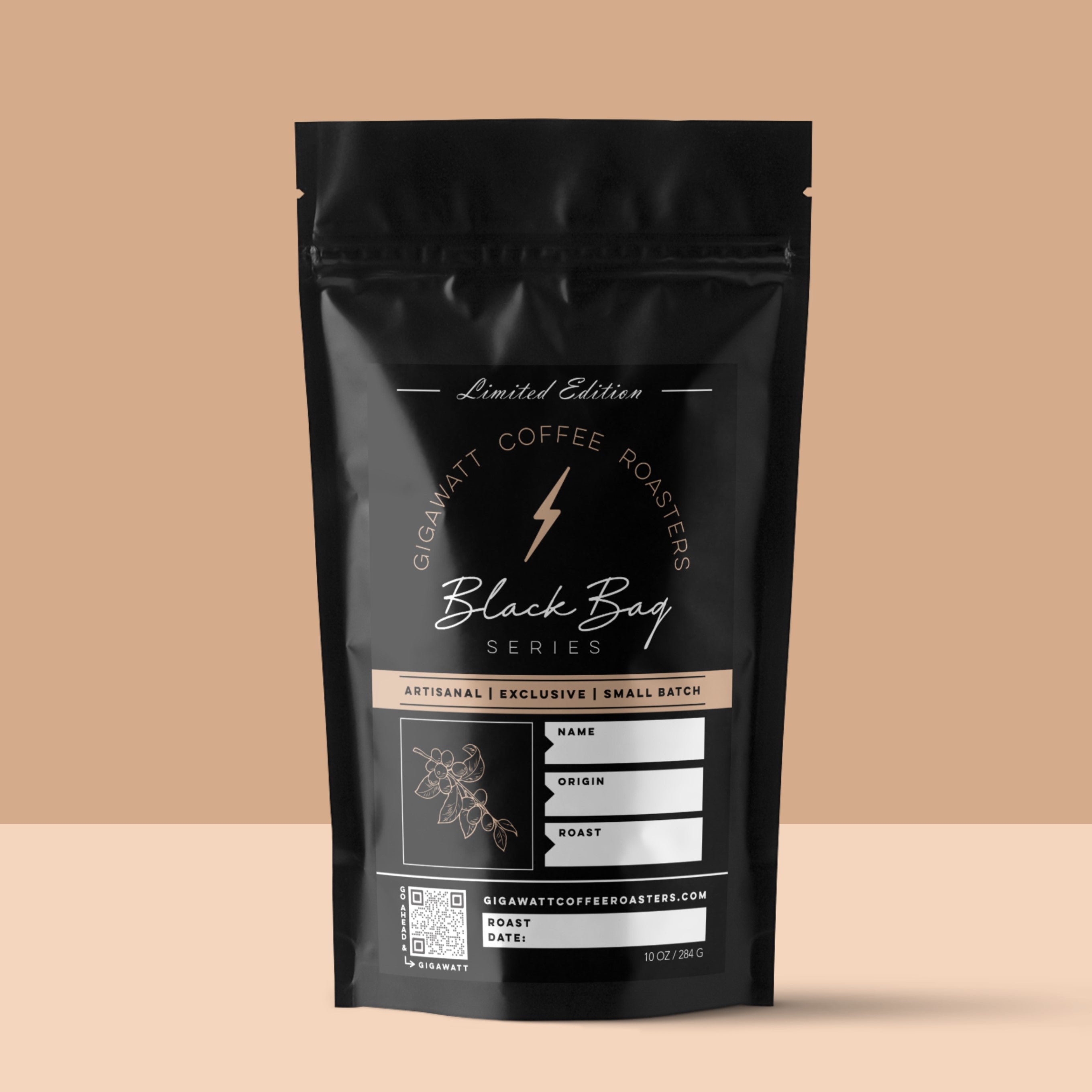


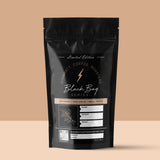
Black Bag Series
Light Roast | Limited Release
Black Bag Series – Ethiopian Gotiti Gedeb
Part of our limited Black Bag Series, this anaerobic natural Ethiopian is the juiciest coffee in our lineup. Red plum leads the way with a ripe, red berry sweetness, and molasses sits underneath to give it depth and richness. What makes it special is the balance. It drinks bright and fruit forward without the sharp acidity you usually get from a coffee this vibrant. Grown by smallholder farmers in Banko Gotiti at over 2,100 meters and processed at a woman-led drying station in Gedeb.
Why You'll Love It
- Exclusive Small Batch: One sack only, roasted in limited quantities.
- Juicy & Fruit Forward: Red plum and red berry sweetness through the whole cup.
- Flavor Notes: Red Plum, Molasses.

What This One Tastes Like
An anaerobic natural Ethiopian grown above 2,100 meters. Bright and fruit forward, without the sharp acidity you usually get from a cup this vibrant.
Where These Notes Come From
Every note above comes from the bean itself. The altitude it grew at, the way the cherry was fermented and dried, and how we roast it all shape what you taste. Air roasting suspends the beans on hot air instead of tumbling them against hot metal, so the chaff lifts away during the roast and what is already in the bean comes through clean, never bitter and never burnt.
Banko Gotiti to Bensenville
Five steps, two continents, and about eleven months between the tree and your grinder.
Banko Gotiti, two hectares at a time
This coffee comes from smallholder farmers around Banko Gotiti village, working plots that average about two hectares, high enough that the cherries ripen slowly and build sugar. The trees grow under a natural canopy of indigenous species including ensete, the false banana that is a staple food crop across Ethiopia. Farmers here grow without chemical pesticides or fertilizers.
Handpicked, late November into January
Every cherry is selectively handpicked, which means pickers walk the same trees repeatedly and take only what is ripe. The cherries are then floated in water so the underdeveloped ones rise and get pulled out before drying. This one lot came to 38,400 kilograms of cherry gathered from farms across the area.
Run by a woman-owned exporter
The Gotiti drying station is rented and managed outright by an Ethiopian woman-owned exporter, a company built around creating opportunity for women farmers and pulling only the best cherry from trusted nearby farms. It is a small detail on paper and a large one in practice. Whoever runs the station decides what gets accepted, and that decision is most of what ends up in the cup.
Anaerobic natural, 12 to 15 days on raised beds
Anaerobic means the cherries ferment sealed off from oxygen before they ever hit the beds, and that closed fermentation is where the red plum and molasses come from. After that they dry whole in the sun on raised beds for 12 to 15 days depending on the weather, turned constantly for evenness. Local women hand-sort the parchment during and after drying, pulling defects one at a time.
Addis to Djibouti to our roastery
From Gedeb the coffee moves to storage in Addis Ababa, then by rail to the port of Djibouti, then across the ocean to us. We air roast it in Bensenville, Illinois on a fluid bed, which suspends the beans on hot air instead of tumbling them against hot metal. The chaff lifts away during the roast, so nothing scorches and none of that fruit gets buried under a burnt edge.
One sack. When it is gone, it is gone for good.
Shop All CoffeeWhy People Wait for the Black Bag
Every release is different. The reason people come back is not.
I love the Black Bag Series, it's a special edition on the weekends.
I always get a black bag series coffee whenever it is available as I love them every time.
This just might be the very best coffee I've ever had.
Black Bag Series FAQ
-
What is the Gigawatt Black Bag Series?
The Black Bag Series is Gigawatt Coffee Roasters' rotating limited release. Each one is a different coffee bought in a very small amount, sometimes a single sack, then air roasted in Bensenville, Illinois and sold until it runs out. It is where we put the coffees that are too small or too unusual to keep in the everyday lineup.
-
What coffee is in the Black Bag Series right now?
The current release is always described at the top of this page. We update the product name, tasting notes, and origin details every time a new Black Bag goes live, so whatever you see above is what is in the bag today.
-
How often does the Black Bag Series change?
There is no fixed schedule. A release lasts as long as the supply lasts, which is usually a few months, though a popular one can sell out much faster. When a Black Bag sells out, the next one takes its place on this page.
-
Can I get the Black Bag Series on a coffee subscription?
No. The Black Bag Series is a limited release in small quantities, so there is never enough of any single coffee to guarantee a recurring delivery. If you want fresh coffee arriving on a schedule, our coffee subscriptions cover our year round blends and single origins, and you can always add a Black Bag as a separate order while it is in stock.
-
Will a past Black Bag Series coffee come back?
Almost never. These are one time buys, so once a release sells out we generally cannot source that exact coffee again. If a Black Bag turns out to be your favorite, it is worth grabbing another bag before it is gone.
-
Is the Black Bag Series always a medium roast?
Most releases land in the medium range, but not all of them. Roast level, origin, and processing all change from one Black Bag to the next. The roast level for the current release is listed at the top of this page, so it is worth checking each time even if the last one was not your style.
-
How do I find out when the next Black Bag Series coffee drops?
Our email and text subscribers hear first, and that is usually the only heads up before a release sells out. Sign up through the form at the bottom of this page, or bookmark this page and check back. You can also find us at Chicagoland farmers markets and events, where we bring the current release to the booth.
Still have questions? Get in touch and we will get you an answer.